

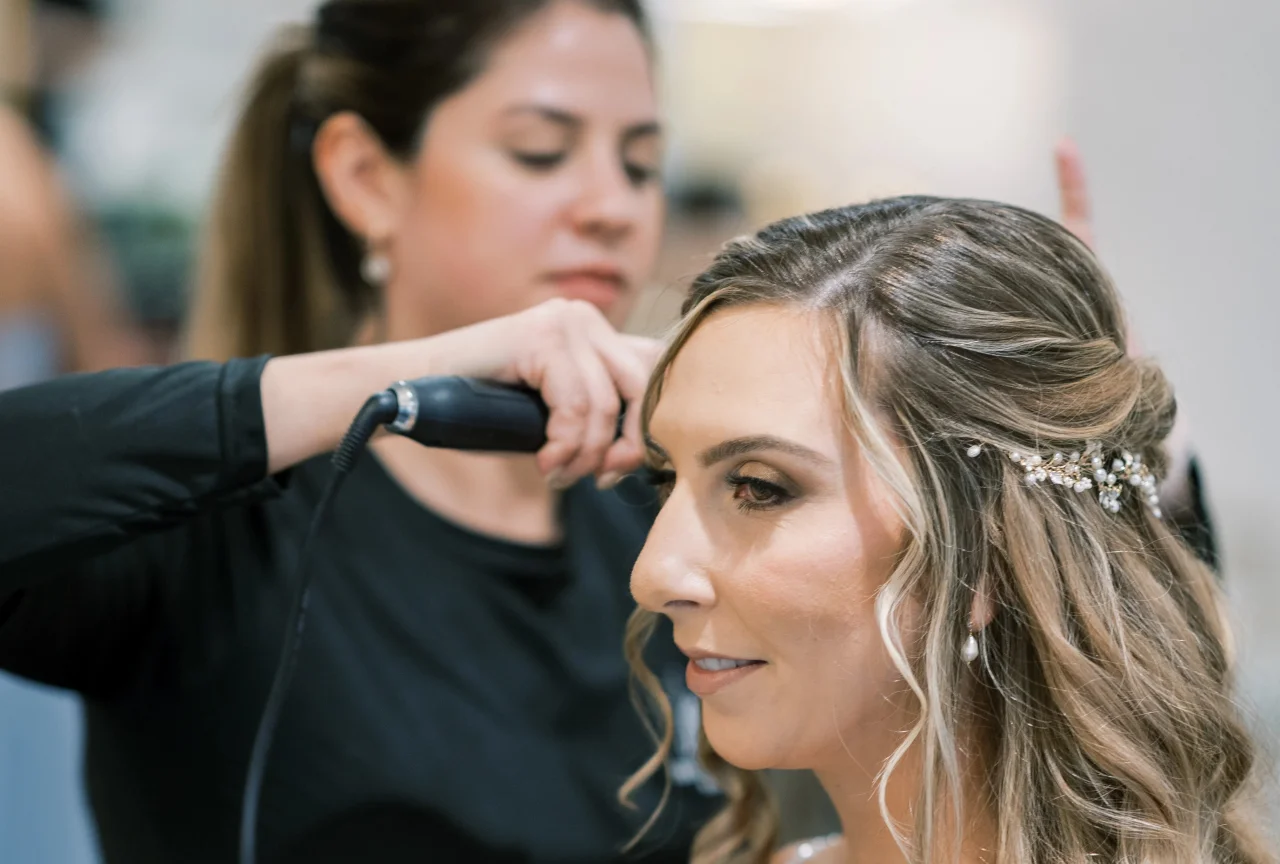
Choosing your wedding hair and makeup artist is one of the most important decisions you’ll make as a bride. Most brides focus on finding someone whose work looks beautiful on Instagram. But the artist who photographs beautifully on someone else’s feed may not be the right person to have in your getting-ready room on one of the most emotional mornings of your life.
After 500+ weddings, we’ve seen firsthand what makes this decision go right and what happens when it doesn’t. This guide walks you through everything you need to know, from defining your style to signing a contract with confidence.
Define Your Bridal Beauty Style Before You Start Searching
Before you open Instagram or Google a single name, you need to know what you’re looking for. Most brides skip this step and then struggle to evaluate the artists they find.
Natural, soft glam, or full glam — know the difference before you search
Start with your aesthetic. Are you drawn to natural bridal makeup? Or do you want soft glam, with defined eyes and a polished finish? Full glam, with sculpted contour and a bold lip?
These aren’t just visual preferences. They determine which artists are even worth contacting. An artist who specializes in soft, skin-forward looks may not be the right fit if you want a dramatic bridal glam. The best way to find your match is to be clear about what you want before you reach out.
How to build a vision board that actually communicates your look
Spend 20 minutes on Pinterest or Instagram and save the looks that stop you scrolling. Save what feels like you. Then look at those images with honest eyes: is the skin finished or full-coverage? Is the hair structured or relaxed?
Bring those images to every conversation you have with a potential artist. Describing a look in words is nearly impossible. A focused set of inspiration images does the work for you.
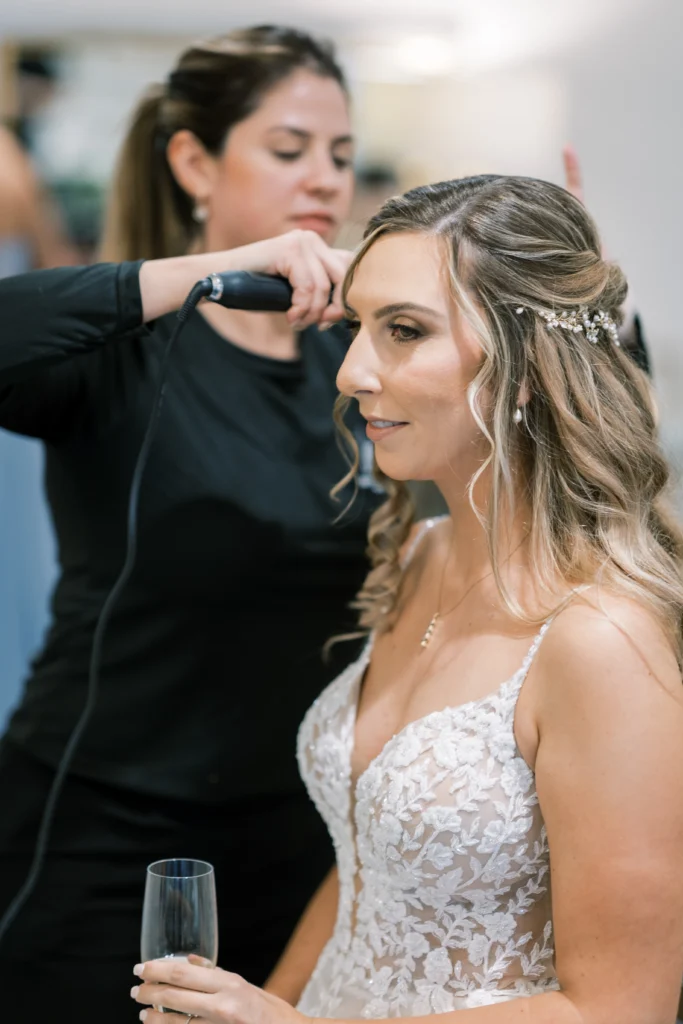
How to Evaluate a Bridal Portfolio (Beyond the Instagram Feed)
A beautiful feed is not a portfolio. A portfolio is a body of work that shows range, skill with diverse skin tones and hair textures, and consistency across different brides and settings.
What real-bride photos tell you that styled shoots don’t
Look for real brides, not styled shoots. Editorial work is art direction (a full team making everything perfect for a single camera angle). Your wedding morning will not look like that. Real-bride images, taken in real venues and real light, tell you far more about what an artist can deliver under pressure.
Also, look for images that haven’t been heavily retouched. Heavy editing can hide poor foundation blending, uneven lash application, or makeup that breaks down after two hours. A confident artist shares honest images because their work holds up without filters.
Skin tone range, hair texture, and why versatility matters
If every bride in a portfolio looks similar (same complexion, same hair type, same aesthetic), that’s worth noting. A skilled bridal beauty team works fluidly across every complexion, from fair to deep, and every hair texture, from fine and straight to thick, curly, or color-treated.
This matters especially if your bridal party is diverse. You want a team that makes every person in that room feel as considered as you do.
One note on inspiration images: if you’re bringing AI-generated photos or heavily retouched Pinterest images to your consultation, be open to finding references that show a look achieved on real skin. That gives your team a realistic, achievable target.
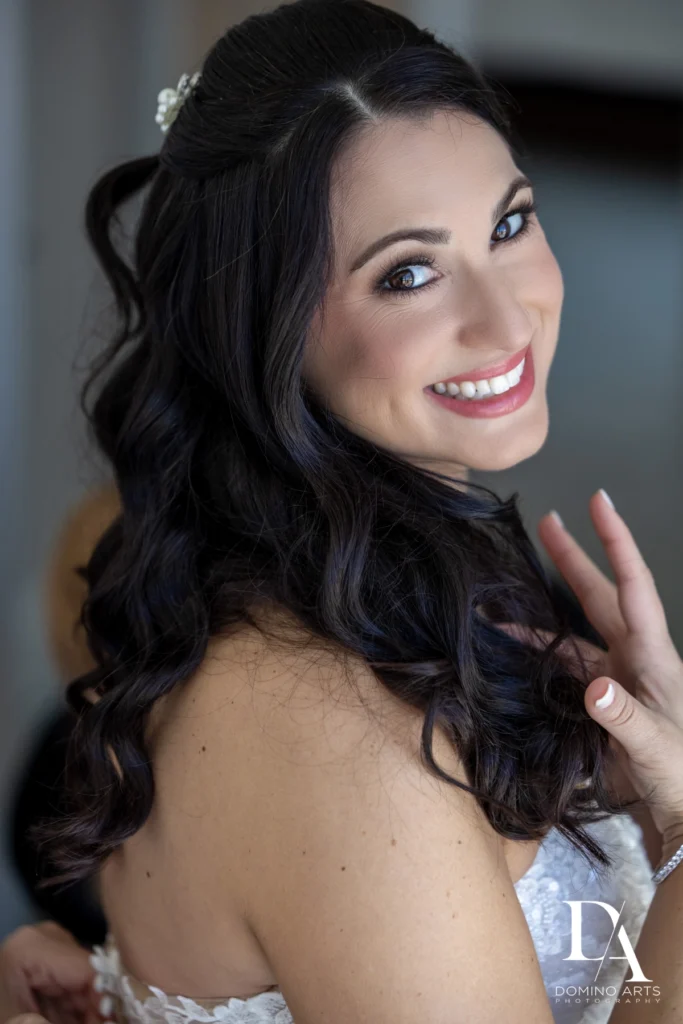
What Wedding Reviews Actually Tell You and What to Look For
Reviews are proof that an artist can deliver consistently across different brides, wedding mornings, and kinds of pressure.
Where to find honest reviews for bridal artists
Look on Google, The Knot, WeddingWire, and Zola. All carry verified reviews from past clients, but don’t stop at the star rating. Read the actual words.
The phrases that signal real professionalism
Pay attention to mentions of:
- Punctuality and reliability — “She arrived early, and everything ran on schedule” tells you more than “she was amazing.”
- How the artist listened and responded to feedback (especially during the trial).
- How the makeup photographed and how long it lasted through the ceremony, dancing, and the end of the night.
- How the artist handled pressure — a large bridal party, a tight timeline, a last-minute change.
What should give you pause: reviews that are vague, short, or focused only on the final look without mentioning the process or experience. And if an artist has no verified reviews, no contract, and no clear booking structure: keep looking.
Solo Artist vs. Bridal Beauty Team — This Decision Matters More Than You Think
This is a question most brides never think to ask, and it’s one of the most important ones you’ll face.
What changes when you book a team for your wedding morning
Booking a solo artist means one person handles every look, including yours and your bridal party’s. If your party is small and your timeline is relaxed, this can work well. But if you have four or more people getting hair and makeup, a single artist creates a bottleneck that puts your entire morning at risk.
Booking a professional bridal beauty team means multiple licensed artists working in coordinated shifts, with a clear timeline for every person in your party. If one artist encounters a challenge, there’s support. The getting-ready experience feels organized and calm.
The question most brides forget to ask about who’s actually there
Here’s the one that matters most: who will be doing your hair and makeup on the actual wedding day?
Some artists do the trial themselves, then send team members on the wedding day. That’s not inherently a problem, but you deserve to know. Ask directly: “Will you personally be my artist on the wedding day? And who will be handling my bridal party?”
A transparent team answers without hesitation.
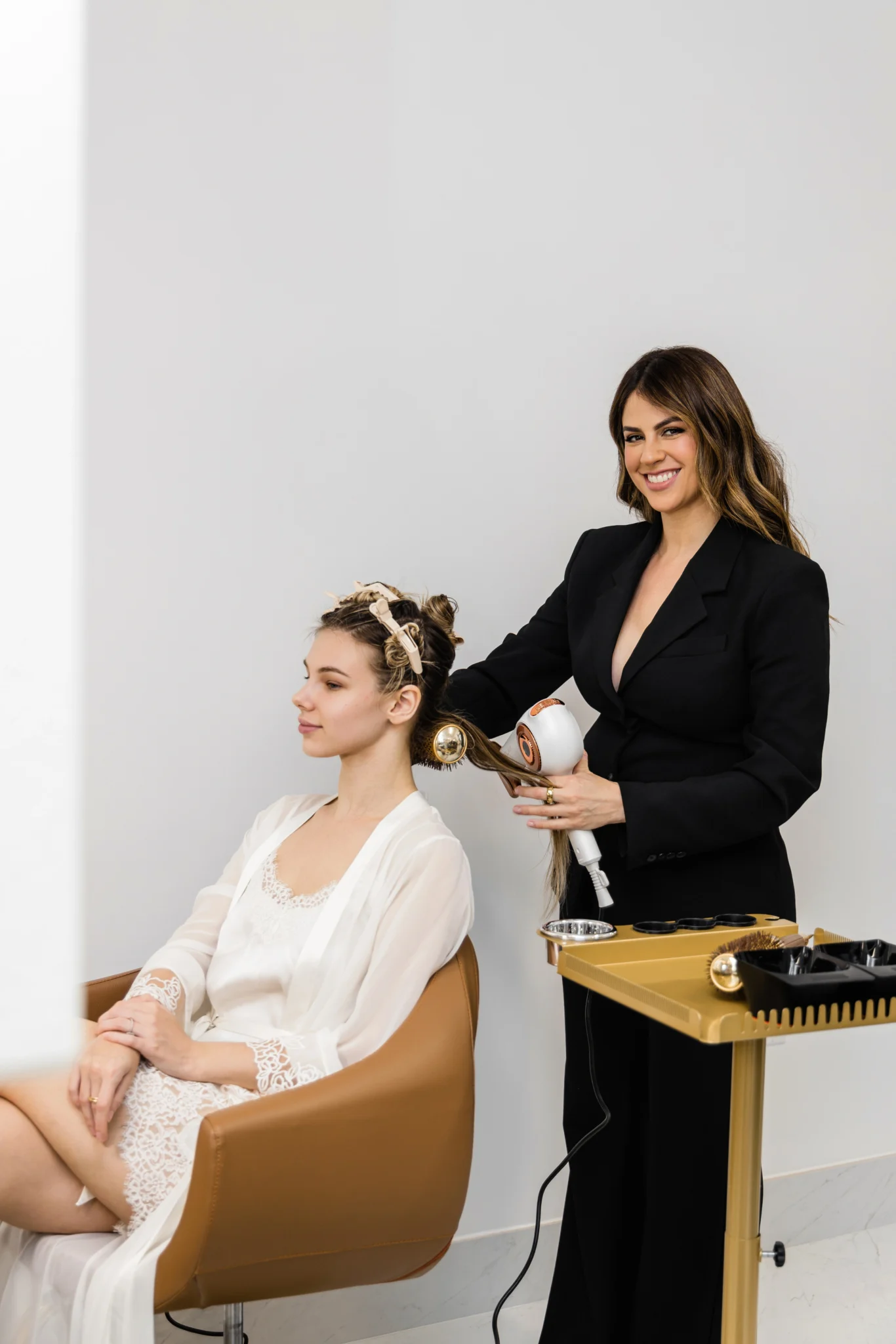
Questions to Ask a Wedding Makeup Artist Before You Book
Most brides ask: “Are you available on my date?” and “What are your rates?” Those are necessary, but they’re not enough. Before committing, ask every artist you’re seriously considering these questions:
About experience and process
- How many weddings have you worked, and do you specialize in bridal?
- What products do you typically use, and are they suitable for sensitive skin?
- Do you offer a bridal hair and makeup trial, and is it included in your package?
- How do you approach skin prep before applying foundation?
About your wedding day logistics
- How much time do you need to arrive before the ceremony starts?
- How do you build a timeline for a bridal party of [your number of people]?
- What happens if services run behind schedule?
The questions most brides forget
- What’s your backup plan if you have an emergency on my wedding day?
- Do you use a formal contract, and what does it cover?
- How do you handle feedback during the trial and on the morning of the wedding?
- Will the same artist who does my trial be the one doing my wedding day look?
A professional artist answers these questions without hesitation. They’ve thought through every scenario because they’ve lived through them. If an answer makes you uncomfortable — or if any question is met with defensiveness — trust that feeling.
Why Your Bridal Hair and Makeup Trial Is the Real Deciding Moment
The trial is not just a preview. It’s where you’ll know, clearly and without doubt, whether this is the right team for you.
What a good bridal trial looks and feels like
Your artist asks questions before they touch your face. They want to understand your dress, your venue, your inspiration images — what you loved, and what you’d change. They take notes. They explain their choices. When they finish, they actively invite your feedback, and they mean it.
A good trial feels like a collaboration. A great one leaves you with a clear picture of exactly what your wedding morning can look and feel like.
What to bring, what to change, and what to pay attention to
Bring to your trial:
- Inspiration images — clear and saved, not screenshots of screenshots
- A photo of your dress, or the dress itself, if possible
- The skincare products you plan to use on your wedding morning
- A list of any allergies or skin sensitivities
Pay attention to:
- Does the foundation shade match your neck and chest?
- Does the look feel like you, or does it feel like a costume?
- How does it photograph in natural light versus artificial light?
- Is the makeup comfortable after two hours, or does it feel heavy?
If something isn’t right, say so. A skilled team wants to get this right before your wedding day, not on it. The trial is your opportunity to make every adjustment.
For a deeper look at what to expect, read our full guide on what every bride should know about her bridal hair and makeup trial.
How Far in Advance Should You Book Your Wedding Hair and Makeup?
The honest answer: earlier than you think.
For weddings in South Florida — where peak bridal season runs from November through May — the most sought-after bridal beauty teams book 9 to 12 months in advance. Popular Saturday dates in winter and early spring fill even sooner.
A practical rule: once your venue and date are confirmed, your beauty team should be among the first vendors you secure. Waiting until six months out significantly narrows your options, especially for peak dates or if your wedding requires a team to travel.
Book your trial early too, ideally 2 to 3 months before your wedding date. That leaves time to adjust, refine, and if needed, schedule a second trial without any pressure.
Red Flags to Watch Before You Sign a Contract
The excitement of finding an artist whose work you love can make it easy to overlook warning signs. Don’t.
Portfolio and communication red flags
- A feed filled almost entirely with styled editorial shoots, with very few real-bride images
- Photos that are heavily filtered or clearly retouched
- Slow, inconsistent, or unprofessional communication before you’ve even booked
- No clear process for consultations, trials, or day-of logistics
What a professional booking process should always include
- A formal written contract. This is non-negotiable. It protects you and your team.
- A clear retainer and payment structure.
- Specific details about who will be there, what’s included, and what the cancellation policy is.
- A clear backup plan for emergencies.
During the trial itself, an artist who starts working without asking questions, doesn’t invite feedback at the end, or delivers a look that doesn’t match what you discussed, is worth thinking twice about.
A professional team has systems, contracts, and clear communication in place. Those things are what make your morning feel protected.
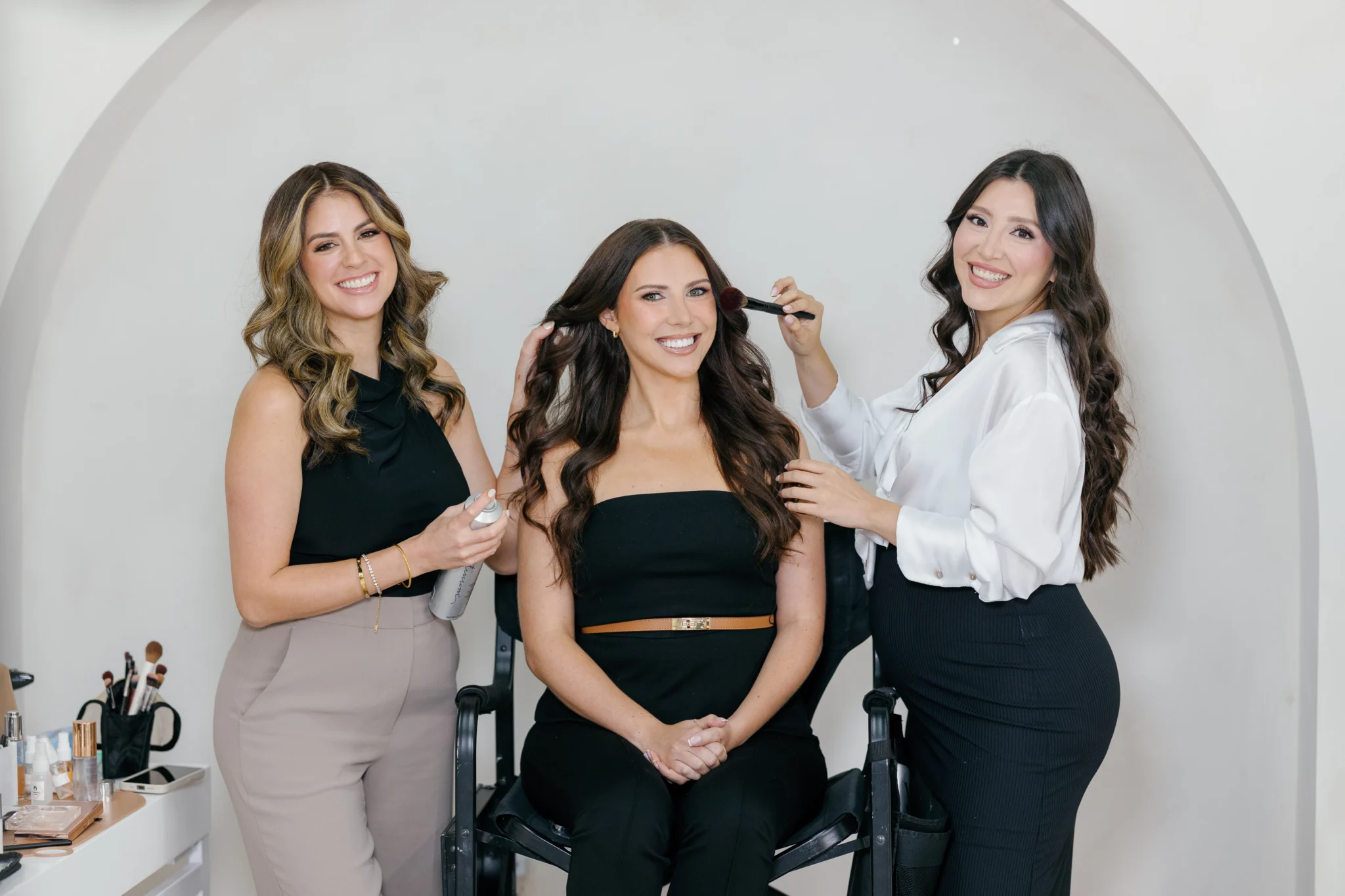
When You’ve Found the Right Team, You’ll Know
There’s a moment when something shifts. You stop wondering if this is the right choice. The artist listens the way you needed to be listened to. The look in the mirror feels like you, but elevated. The morning feels calm before it’s even begun.
That’s what you’re looking for. Not just technical skill, though that matters deeply. You’re looking for a team that makes you feel taken care of, on a morning when you have enough to hold.
When you’re ready to experience it, explore our wedding hair and makeup South Florida services and let us show you what your wedding morning can feel like.